Descripción
Desbloqueando una precisión industrial implacable y una resistencia térmica extrema para la fabricación a gran escala en los Países Bajos.
Al recorrer una enorme planta de fabricación, la vibración física de la maquinaria pesada que mecaniza metal grueso es una experiencia totalmente distinta a la de operar una fresadora doméstica. Hemos visto a gerentes de producción altamente experimentados lidiar constantemente con vibraciones superficiales inaceptables o sufrir roturas completas de herramientas simplemente porque el accionamiento rotacional principal que hace girar la fresa no fue diseñado para cargas industriales sostenidas. Elegir el mejor motor de husillo es mucho más que una simple casilla de verificación en la compra; es la base absoluta de la rentabilidad diaria de su planta. Actualizar a un motor de husillo de alta resistencia para lograr la máxima productividad cambia por completo la dinámica en el taller, reduciendo drásticamente la frecuencia de reparaciones reactivas y elevando instantáneamente la precisión micrométrica de cada pieza producida. En nuestra experiencia trabajando directamente con fabricantes de maquinaria de precisión y operadores experimentados, desde los campus de alta tecnología de Eindhoven hasta los astilleros de ingeniería marítima pesada cerca de Rotterdam, la presión implacable para entregar series de alto volumen impecables es inmensa. La clave está en comprender cómo la arquitectura electromagnética profesional ofrece un par motor puro e inquebrantable sin sobrecalentamiento catastrófico, garantizando así la plena capacidad de producción en un mercado holandés donde la precisión es la única moneda de cambio aceptada.
Descifrando el núcleo: ¿Qué es exactamente un motor de husillo?
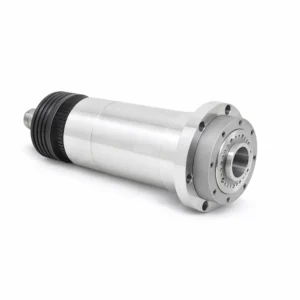
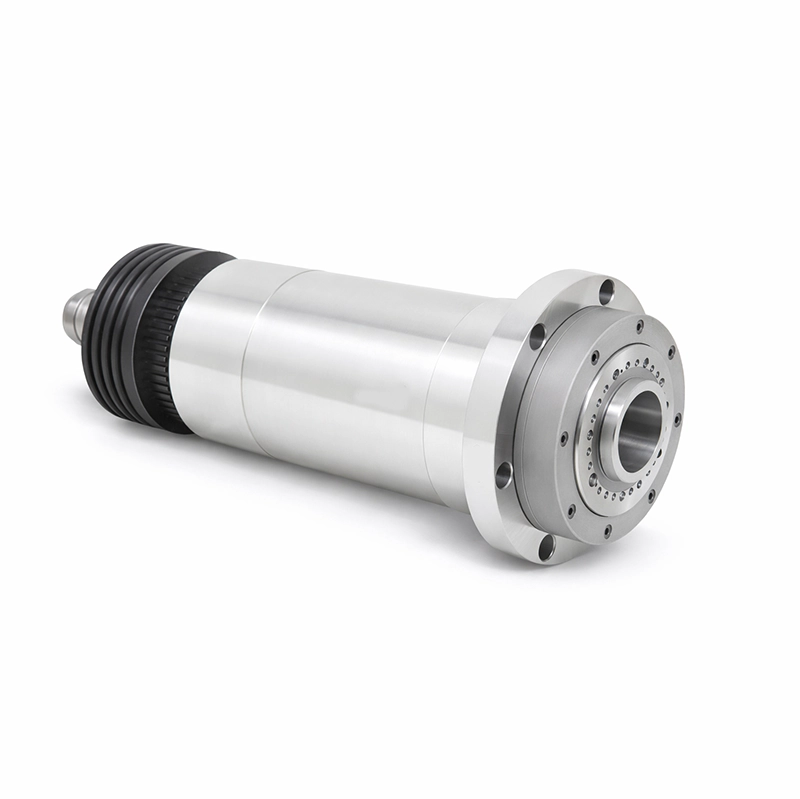
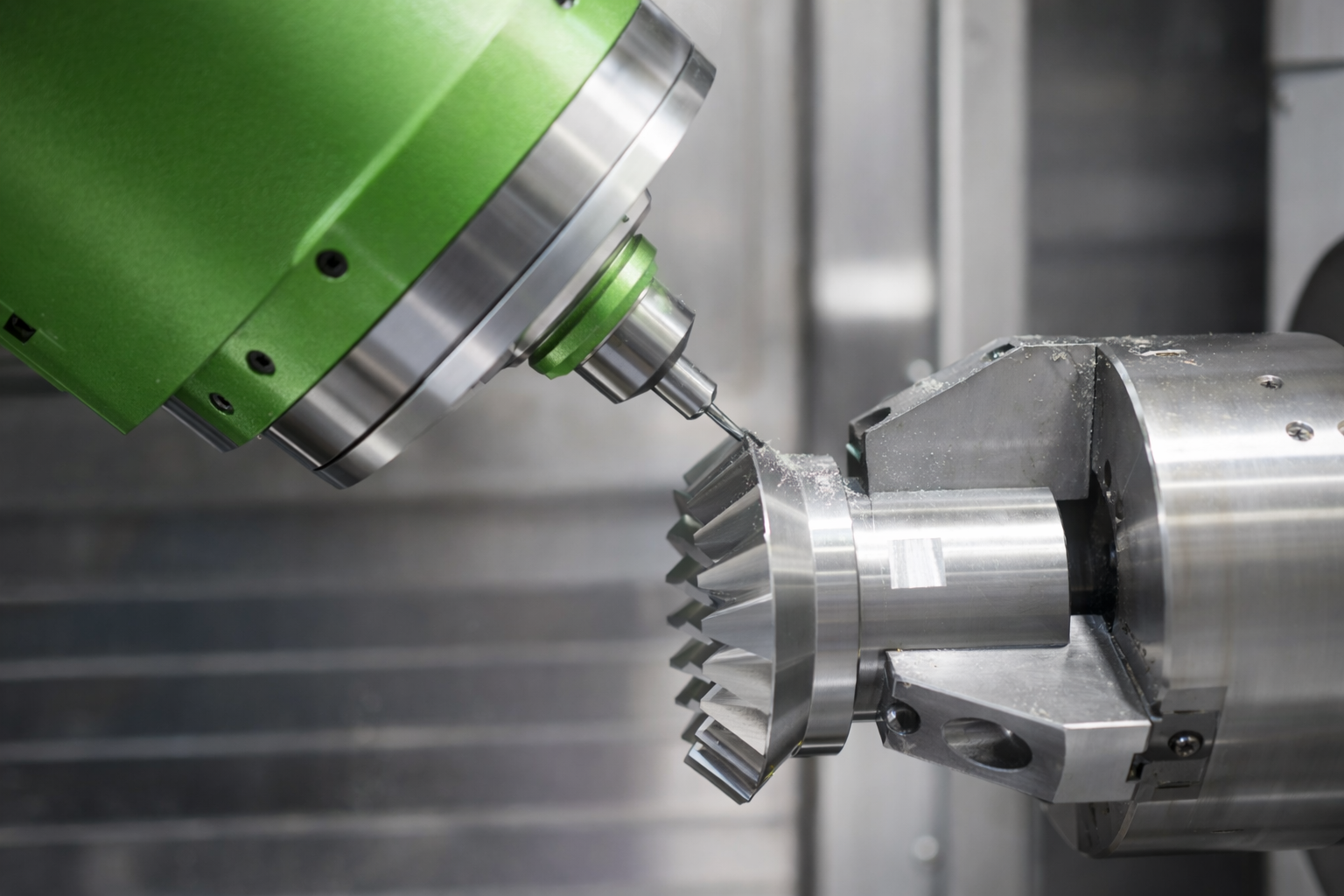
En su nivel de ingeniería más básico, un motor de husillo CNC es un accionamiento electromagnético altamente especializado, diseñado exclusivamente para transmitir energía rotacional intensa y sostenida directamente a una herramienta de corte o a una pieza de trabajo en rotación. Comparar estas unidades de precisión con los motores de inducción industriales estándar es un grave error: los motores estándar están diseñados simplemente para accionar cintas transportadoras o ventiladores, mientras que los motores de husillo de alta velocidad están meticulosamente construidos para soportar brutales fuerzas de deflexión radial y axial (la resistencia física del material que se está cortando agresivamente) manteniendo una rigidez estructural microscópica absoluta. La magia del funcionamiento se produce mediante un variador de frecuencia (VFD) que transforma la corriente eléctrica en un campo magnético de rotación precisa dentro de las bobinas del estator. Este campo magnético, que cambia rápidamente, fuerza violentamente al rotor central a girar sin depender de escobillas propensas al desgaste, convirtiendo instantáneamente la energía eléctrica en la implacable fuerza de corte mecánica necesaria para cortar limpiamente titanio endurecido, paneles compuestos densos o plásticos industriales especializados.
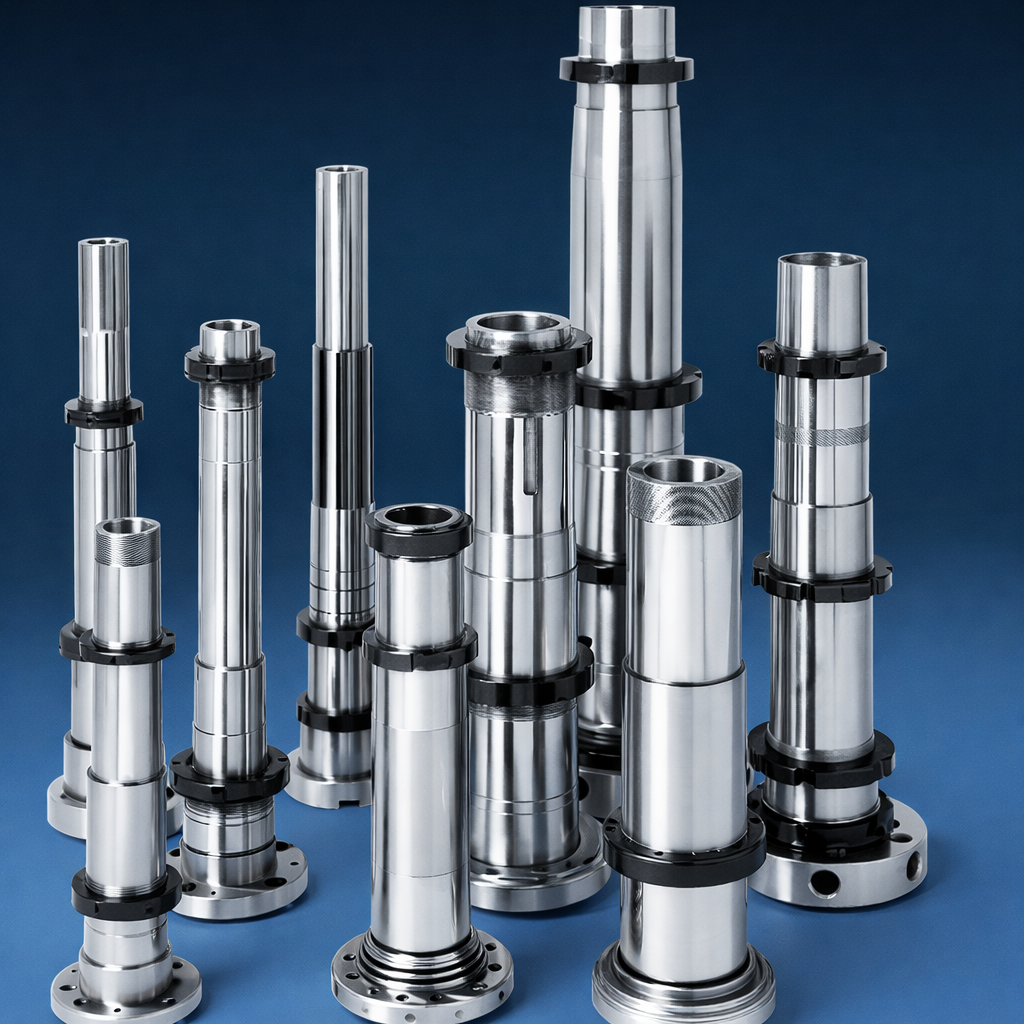
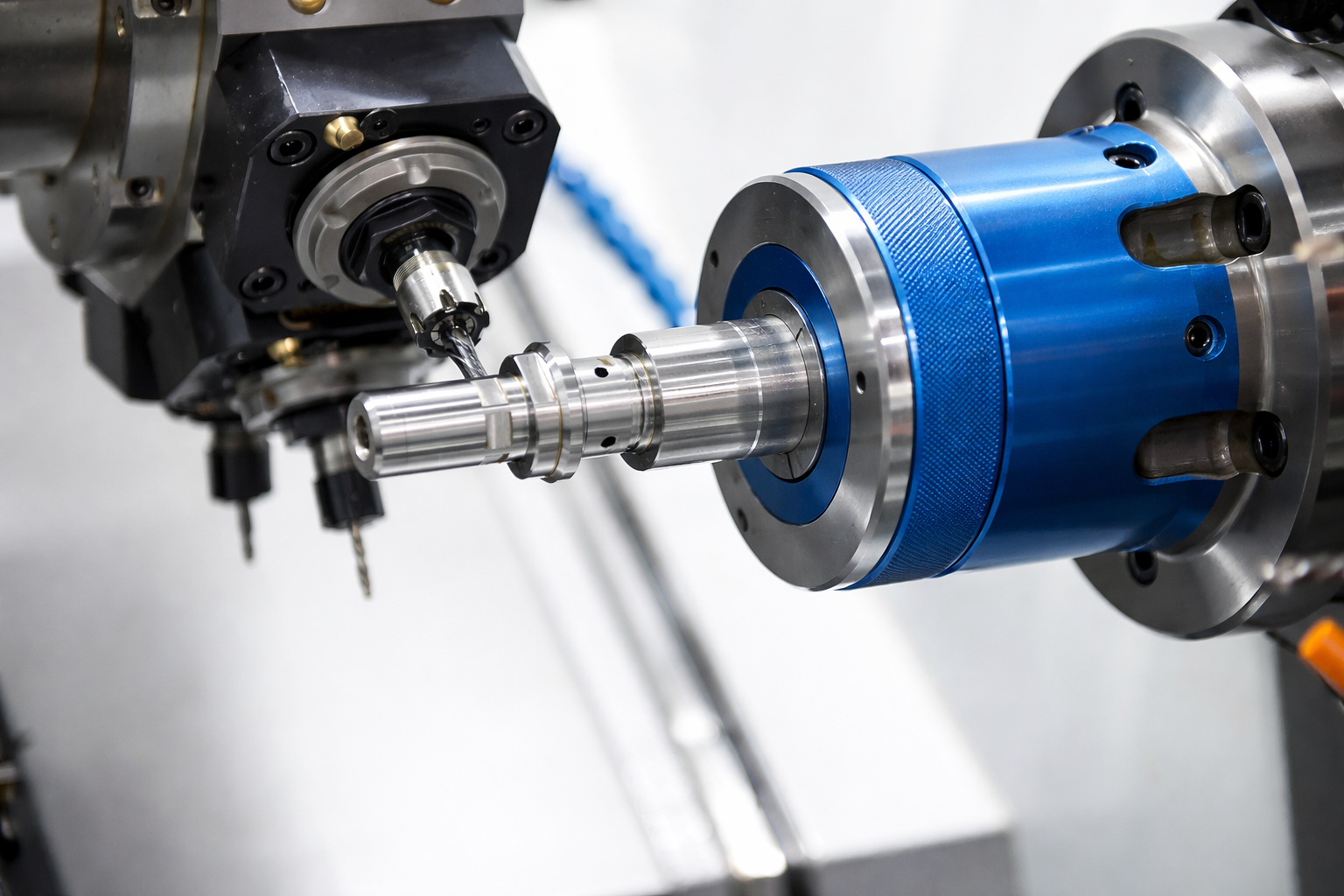
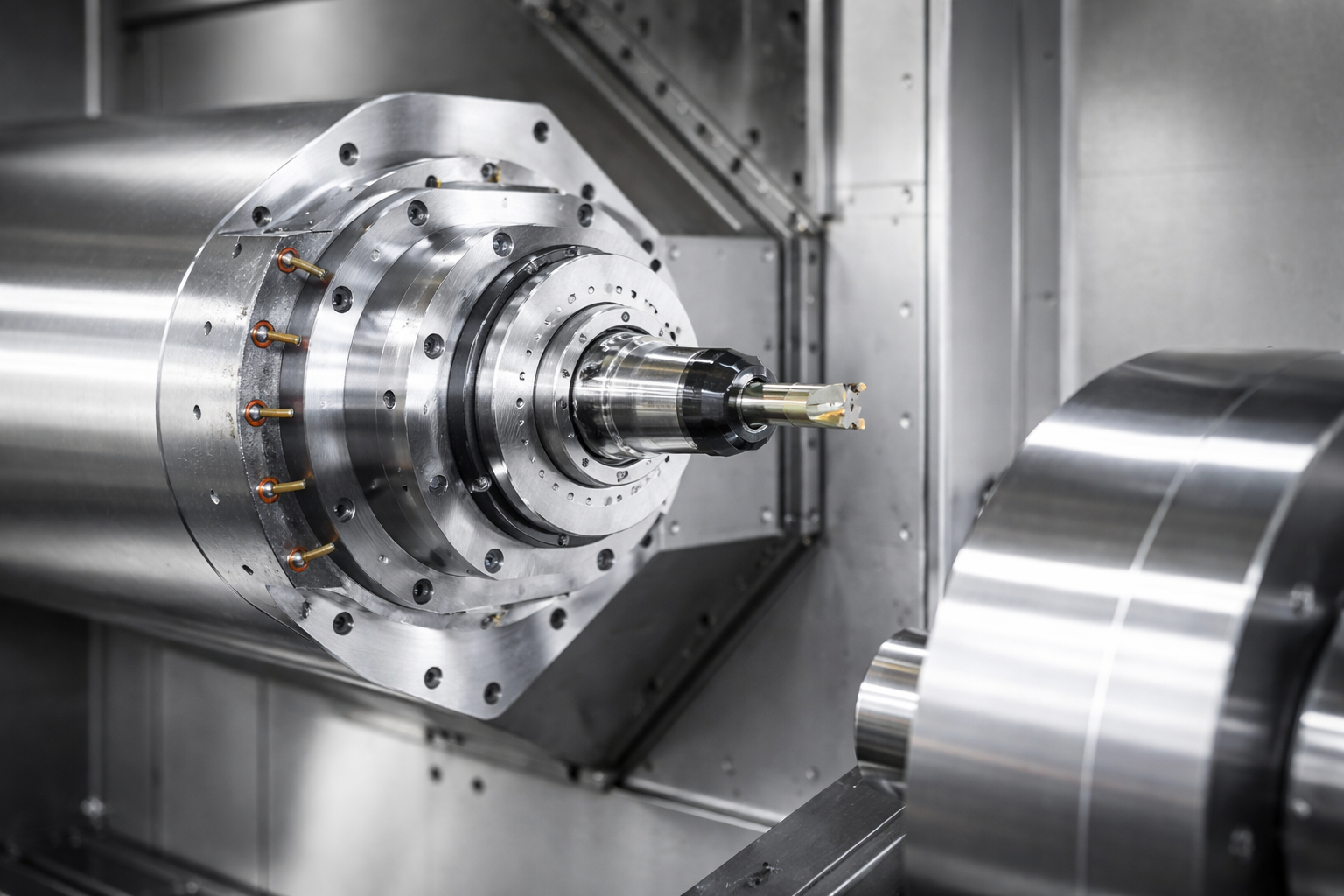
Lo que realmente distingue a un sistema de corte especializado es la arquitectura interna que rodea las bobinas electromagnéticas y los cojinetes de contacto angular de ultraprecisión que sujetan firmemente el eje principal. Dado que aplicar un par motor elevado a velocidades extremas genera un calor intenso, tanto eléctrico como por fricción, estos motores de alta resistencia incorporan camisas de fluido internas o aletas de refrigeración aerodinámicas de alto flujo para disipar activamente el calor de los componentes internos críticos antes de que la expansión térmica pueda alterar la trayectoria de la herramienta programada. Estas potentes máquinas industriales se integran en entornos muy diversos, desde centros de mecanizado de metales de cinco ejes que fabrican soportes aeroespaciales hasta células de carpintería automatizadas que producen ebanistería a medida, demostrando que la ingeniería robusta se adapta perfectamente a diferentes materiales.
Parámetros de ingeniería cruciales que deben evaluarse antes de la actualización.
Navegar por las especificaciones increíblemente complejas de una nueva unidad de accionamiento puede resultar abrumador si no se analizan diagramas de ingeniería a diario. Sin embargo, centrarse en la relación entre la potencia bruta (kW) y el par dinámico es siempre el punto de partida más seguro. Muchos operarios de taller se centran demasiado en la potencia máxima (que siempre luce fantástica en un folleto de maquinaria de alta calidad), pero pasan por alto la realidad de que el enorme par a bajas revoluciones es la fuerza física real necesaria para empujar una fresa frontal pesada a través de un bloque de acero sin que el motor se cale a mitad del corte. Superponer perfectamente la curva de par del motor seleccionado con la densidad específica del material principal es lo que realmente distingue un rendimiento adecuado de una ejecución de fabricación de primera clase. Esto está directamente relacionado con la velocidad de rotación (RPM); hacer girar una fresa de perfil de gran diámetro demasiado rápido literalmente derretirá la pieza de trabajo y arruinará el temple de las costosas plaquitas de carburo, mientras que hacer girar una microfresa delicada demasiado lento provoca que las finas ranuras se rompan instantáneamente debido a cargas de viruta excesivamente agresivas.
Al evaluar tareas de alto rendimiento, el acalorado debate sobre la gestión térmica inevitablemente se convierte en el centro de atención en el taller. Los sistemas de refrigeración líquida utilizan una intrincada red de canales internos para hacer circular una mezcla líquida fría directamente alrededor del bloque del estator, proporcionando una estabilidad térmica inigualable para el tallado pesado continuo e incesante (y funcionan increíblemente silenciosos, lo que supone una gran ventaja para los operarios). Sin embargo, requieren la integración de un sistema externo de refrigeración y bombeo. Los diseños de refrigeración por aire utilizan un ventilador accionado por eje para impulsar el aire ambiente del taller a través de disipadores de calor externos de gran profundidad; son extraordinariamente fáciles de instalar y prácticamente plug-and-play, lo que los hace atractivos para configuraciones donde las cargas térmicas ambientales extremas no son un problema principal. La precisión y la estabilidad de la excentricidad se derivan naturalmente del control térmico; un motor de husillo de alta resistencia para una productividad máxima debe ofrecer clasificaciones de excentricidad submicrónicas garantizadas en el cono, asegurando que las intrincadas trayectorias de herramienta que se programan encajen a la perfección desde el principio. Mantener esa desviación bajo control depende totalmente de su dedicación al mantenimiento proactivo del motor del husillo, transformando lo que solía ser una frenética reparación de emergencia a medianoche en una rutina altamente predecible y manejable.
Cumplir con los rigurosos estándares del mercado neerlandés.
El panorama manufacturero contemporáneo de los Países Bajos es un centro reconocido mundialmente por su ingeniería de precisión sin concesiones, sus flujos de trabajo continuos altamente automatizados y su firme compromiso con los métodos de producción sostenibles. Desde las impecables cadenas de suministro de alta tecnología que dan soporte a la industria de semiconductores hasta las grandes instalaciones de fabricación marítima que abastecen la infraestructura europea, la ingeniería neerlandesa se basa en gran medida en equipos físicos que ofrecen una fiabilidad absoluta e incuestionable. Al colaborar estrechamente con los equipos de compras de la región, se observa que la conversación prácticamente nunca gira en torno a encontrar la opción más barata; se centra en la fiabilidad verificable a largo plazo, los costes operativos totales del ciclo de vida y el estricto cumplimiento de las normas medioambientales europeas. Un motor de husillo CNC de alta gama utilizado aquí debe minimizar drásticamente el consumo innecesario de energía mediante un diseño electromagnético superior, en consonancia con las rigurosas iniciativas ecológicas corporativas y la cruda realidad de los elevados costes de la electricidad industrial en todo el continente.
El cumplimiento de la normativa CE y la estricta observancia de las directivas de baja tensión y maquinaria son requisitos básicos, no mejoras opcionales. Cada variador integrado debe superar sin problemas las auditorías de seguridad locales y las pruebas de interferencia electromagnética, sin generar ninguna alerta para los inspectores. Sabemos, por experiencias compartidas, que en una cadena de suministro altamente optimizada y con tolerancias muy ajustadas, esperar tres semanas a que un componente de repuesto pase la aduana simplemente no es una opción viable. Por ello, asociarse con un proveedor profundamente integrado que comprenda las exigencias normativas europeas resulta absolutamente indispensable.
Voces directas de la planta de producción holandesa
“Alternamos rápidamente entre el fresado agresivo de acero pesado y el perfilado 3D de aluminio de alta precisión. Encontrar un motor potente que manejara ambos extremos sin una gran deriva térmica fue una lucha constante hasta que instalamos esta unidad de alta resistencia. La desviación de conicidad es prácticamente inexistente, incluso durante los cortes de desbaste más intensos. ¡Es sin duda la mejora de motor de husillo CNC más fiable que hemos realizado para nuestro taller de precisión en Utrecht!”
— Jeroen V., Director de Producción, Mecanizado de Precisión
La completa documentación CE e ISO fue impecable desde el primer momento, lo que dejó a nuestro equipo de cumplimiento normativo completamente satisfecho. La fuerza de corte maneja sin esfuerzo el denso acero para herramientas P20, y la estabilidad térmica es realmente fantástica. Hemos logrado reducir significativamente las revisiones mensuales de mantenimiento del motor del husillo gracias a que los sellos de laberinto cumplen su función a la perfección.
— Saskia D., Ingeniera principal de fabricación, Sistemas de automatización
“En nuestras operaciones continuas, el polvo metálico microscópico solía dañar constantemente los cojinetes de nuestros motores estándar en cuestión de meses. El sellado con presión de aire positiva de estas nuevas unidades de alta eficiencia evita por completo la entrada de contaminación. Han estado funcionando en doble turno durante más de un año con una fiabilidad increíble e ininterrumpida.”
— Martijn K., maquinista CNC senior, componentes aeroespaciales
Adquisiciones estratégicas: Potenciando su colaboración en el sector manufacturero.
Tomar una decisión crítica sobre hardware basándose únicamente en una hoja de especificaciones y el precio inicial más bajo garantiza un tiempo de inactividad desastroso en su línea de producción. Nuestra gran ventaja tecnológica reside en la ingeniería meticulosa y desde cero de la dinámica de nuestros rotores y nuestras técnicas patentadas de bobinado de estator. Este enfoque deliberado ofrece una eficiencia eléctrica líder en la industria, a la vez que reduce drásticamente la generación de calor parásito que suele afectar a las alternativas más baratas y de peor calidad. Nos enorgullece contar con una amplia y sólida cartera de motores de husillo de alta velocidad de primera calidad que superan sistemáticamente las estrictas certificaciones de calidad CE, ISO y RoHS exigidas por los organismos reguladores europeos, lo que garantiza su perfecta integración en su infraestructura actual.
Lo que realmente distingue a nuestro equipo de los proveedores de repuestos estándar es nuestro firme compromiso con un soporte posventa integral y una formación proactiva en el mantenimiento de motores de husillo. No nos limitamos a enviar una pesada caja de madera a su muelle de carga y dejar de responder a sus correos electrónicos. Nuestro equipo de ingeniería colabora activamente con sus técnicos locales para optimizar meticulosamente los parámetros de aceleración de su variador de frecuencia y establecer patrones de vibración de referencia críticos para el análisis predictivo. Entendemos perfectamente que los artículos estándar de catálogo rara vez se ajustan a la complejidad de la fabricación de maquinaria a medida, razón por la cual nuestra división de ingeniería especializada se centra en proporcionar soluciones personalizadas y de respuesta rápida. Junto con nuestra cadena de suministro altamente optimizada y una sólida gestión de inventario europea, garantizamos plazos de entrega excepcionalmente rápidos que evitan que un solo componente defectuoso provoque una parada de producción catastrófica.
Escenarios de aplicación versátiles en industrias avanzadas
La notable versatilidad de un motor de husillo de alta resistencia diseñado adecuadamente para lograr la máxima productividad le permite funcionar como el corazón de disciplinas de fabricación muy diversas. En el mecanizado de metales pesados, el motor debe proporcionar constantemente una enorme rigidez radial y un par dinámico inquebrantable para realizar operaciones de roscado rígidas y evitar que la herramienta de corte se atasque o produzca marcas de vibración terribles en componentes costosos de aluminio o acero. Al pasar a la extensa industria de la carpintería, los requisitos mecánicos cambian por completo; el fresado limpio de maderas duras y materiales laminados altamente abrasivos como la melamina exige velocidades de rotación increíblemente altas para garantizar un borde impecable y sin quemaduras. El ámbito de la fabricación de plásticos y acrílicos presenta un delicado equilibrio térmico; si los motores de husillo de alta velocidad giran demasiado rápido o la velocidad de avance de la máquina es demasiado lenta, la fricción localizada hace que el plástico literalmente se derrita y se suelde de nuevo a la fresa, arruinando instantáneamente la pieza de trabajo y pudiendo romper la herramienta.
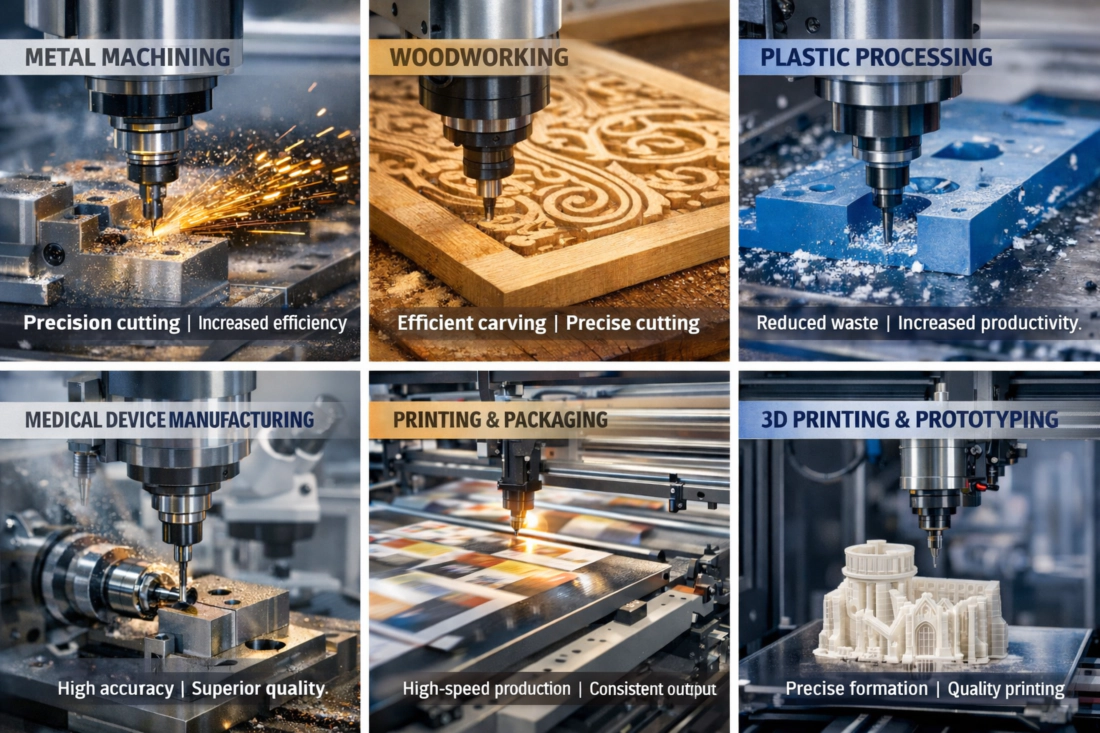
Adentrándonos en sectores más especializados, la industria de fabricación de dispositivos médicos depende exclusivamente de estos motores de ultraprecisión que operan en entornos de sala limpia estrictos para mecanizar sin fallos implantes biocompatibles a partir de aleaciones notoriamente difíciles. ¡Aquí, las tolerancias dimensionales se miden estrictamente en micras! En el vertiginoso mundo de la impresión y el embalaje industrial, la mayoría de las impresoras no se dan cuenta de que la consistencia absoluta de sus troqueles de corte rotativos de alta velocidad y mecanismos de corte de láminas de precisión depende totalmente de la retroalimentación del codificador de bucle cerrado del motor de accionamiento y de la consistencia absoluta de la velocidad, un área donde los motores baratos generan enormes errores de registro. Incluso en la frontera en rápida evolución de la impresión 3D industrial a gran escala y el prototipado rápido avanzado, las modernas máquinas herramienta híbridas combinan a la perfección la deposición aditiva de polímeros con el fresado sustractivo, dependiendo en gran medida de motores de husillo ligeros y versátiles para limpiar con precisión las superficies impresas sobre la marcha.
Excelencia en ingeniería: ventajas tangibles del producto
Decidir modernizar su maquinaria de fábrica con nuestros avanzados sistemas de accionamiento le permitirá obtener mejoras inmediatas y fácilmente cuantificables en todo su flujo de trabajo de fabricación. El diseño electromagnético meticulosamente equilibrado se traduce directamente en un consumo energético excepcionalmente bajo, lo que ofrece una enorme ventaja operativa para las instalaciones holandesas que buscan reducir drásticamente su huella de carbono y sus facturas mensuales de servicios públicos. La durabilidad inquebrantable está integrada en cada unidad; gracias al uso exclusivo de aleaciones de acero de grado aeroespacial y rodamientos híbridos cerámicos rectificados con precisión, estos accionamientos de alta gama soportan sin problemas las fuertes cargas de impacto del fresado intensivo. Esta rigidez mecánica inherente proporciona un control de precisión absoluto y reduce drásticamente la vibración armónica en la punta del filo de corte.
| Característica de ingeniería principal | Impacto directo en la producción | Capacidad técnica |
|---|---|---|
| Desviación cónica ultrabaja | Elimina las vibraciones de la herramienta, mejora notablemente los acabados superficiales y prolonga significativamente la costosa vida útil de las brocas de carburo. | Constantemente < 0,002 mm |
| Rodamientos híbridos de cerámica | Reduce drásticamente la dilatación térmica y la fricción interna durante el tallado continuo a alta velocidad de 24.000 RPM. | Clasificado para más de 24.000 RPM |
| Chaquetas térmicas optimizadas | Evita el sobrecalentamiento catastrófico del estator y mantiene la estabilidad dimensional del eje Z durante cortes de alivio 3D prolongados. | Líquido o aire de alto caudal |
| Par motor dinámico a bajas revoluciones | Permite un mecanizado agresivo de metales duros sin que el motor se cale a mitad del corte. | Perfiles optimizados para variadores de frecuencia |
Más allá de la mera producción mecánica, nuestra filosofía de diseño intrínsecamente ecológica garantiza el estricto cumplimiento de las normativas europeas sobre ruido y emisiones, lo que aumenta la seguridad de sus operarios y crea un entorno de trabajo mucho mejor. Hemos diseñado estos sistemas para una aplicabilidad extremadamente amplia, lo que significa que una única y robusta arquitectura de motor puede implementarse sin problemas en diversos routers de anidamiento de mesa plana, centros de fresado pesados y celdas de tallado robótico a medida con una mínima complejidad de ingeniería. Elegir nuestros equipos no es solo una compra de piezas estándar; es un paso definitivo y altamente estratégico hacia la modernización completa de sus capacidades de mecanizado de precisión.
Opiniones de expertos: Preguntas frecuentes
¿Cómo puedo seleccionar con precisión el motor de husillo más adecuado para mi máquina CNC?
Para seleccionar el accionamiento perfecto, es fundamental definir con precisión sus necesidades operativas antes incluso de consultar un catálogo. Debe identificar los materiales principales que mecaniza (lo cual determina las curvas de RPM y par necesarias), comprender las limitaciones de montaje físico de la placa del eje Z de su máquina, calcular el peso máximo que su pórtico puede mover rápidamente durante el tallado 3D y verificar la fuente de alimentación disponible en su taller. Le recomendamos encarecidamente que nuestro equipo de ingeniería realice un cálculo personalizado de la fuerza de corte para garantizar que la potencia del motor se ajuste perfectamente a la geometría exacta de sus herramientas y así evitar costosos problemas de potencia insuficiente.
¿Cuáles son las señales de advertencia definitivas de que el motor de mi husillo está empezando a fallar?
Detectar una falla a tiempo es clave para evitar costosas reparaciones inesperadas. El indicador inicial más evidente suele ser un deterioro repentino e inexplicable en el acabado de los bordes de las piezas mecanizadas, lo que apunta claramente a un desgaste de los rodamientos que provoca una desviación del cono. Preste mucha atención a cualquier zumbido agudo, rechinido metálico fuerte o cualquier cambio notable en el zumbido normal de funcionamiento. Vigile de cerca la temperatura; si la carcasa exterior del motor se calienta demasiado al tacto, es probable que haya una degradación severa de los rodamientos. Las alarmas aleatorias de sobrecorriente del variador de frecuencia también son señales de alerta importantes que requieren atención inmediata.
¿Cuál es la diferencia operativa real entre las unidades refrigeradas por agua y las refrigeradas por aire?
En esencia, se trata de encontrar el equilibrio entre la eficiencia térmica y la simplicidad de la instalación, teniendo en cuenta el entorno del taller. Los motores de husillo CNC refrigerados por agua hacen circular activamente un refrigerante líquido a través de intrincados conductos internos, ofreciendo una disipación de calor muy superior, indispensable para el fresado intensivo continuo (24/7) o para operar en entornos con mucho polvo donde un ventilador podría obstruirse (además, son mucho más silenciosos). Los modelos refrigerados por aire utilizan un ventilador integrado para impulsar aire ambiente a través de aletas de refrigeración externas. Su instalación es sumamente sencilla, ya que no requieren enfriadores externos, lo que los hace perfectos para fresadoras de pórtico abierto, siempre que se cuente con una excelente extracción de polvo en el cabezal del husillo.
¿Cómo es un programa adecuado de mantenimiento del motor del husillo?
El mantenimiento impecable del motor del husillo se basa íntegramente en hábitos proactivos y preventivos. Diariamente, los operarios deben asegurarse rigurosamente de que el cono interno y todos los conos de la pinza estén impecablemente limpios; incluso una partícula microscópica de polvo comprimido o viruta metálica puede desequilibrar el sistema y dañar gradualmente los cojinetes cerámicos. Verifique visualmente que todas las vías de refrigeración estén completamente despejadas. Las revisiones semanales deben incluir la inspección de las conexiones de cables pesados para detectar degradación por flexión y la toma de lecturas de vibración de referencia con un medidor sencillo. Se debe programar una inspección profesional completa cada 6 a 12 meses para verificar la excentricidad interna y la resistencia del aislamiento eléctrico.
¿Existen técnicas secretas para prolongar significativamente la vida útil de mi motor?
Absolutamente, ¡y el paso más crítico ocurre antes de que la herramienta de corte toque la materia prima! Implemente siempre una rutina de calentamiento estricta y programada. Hacer girar un husillo completamente frío instantáneamente a 24 000 RPM puede provocar que las bolas del rodamiento cerámico patinen antes de que la grasa interna se haya calentado y distribuido correctamente, causando micropicaduras que reducen drásticamente su vida útil. Programe un ciclo de 5 minutos que aumente gradualmente las RPM. Asegúrese siempre de que sus portaherramientas estén perfectamente equilibrados, utilice energía eléctrica altamente regulada y, si utiliza refrigeración líquida, trate rigurosamente el agua con inhibidores anticorrosivos para evitar la formación de incrustaciones en la camisa.
¿Listo para dominar tus objetivos de producción?
Los componentes rotativos clave que impulsan su maquinaria CNC determinan por completo la calidad, la velocidad de corte y la rentabilidad de toda su operación. Conformarse con sistemas de accionamiento deficientes conlleva errores acumulativos, desperdicio de costosas materias primas y tiempos de inactividad inaceptables. Al integrar nuestros sistemas de husillo de alta gama y gran resistencia, garantiza una precisión inigualable y una productividad constante que se adapta sin esfuerzo a sus objetivos de fabricación más exigentes.