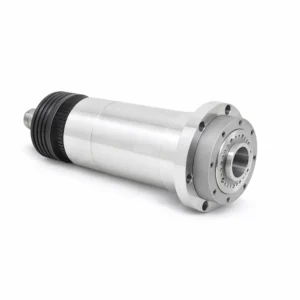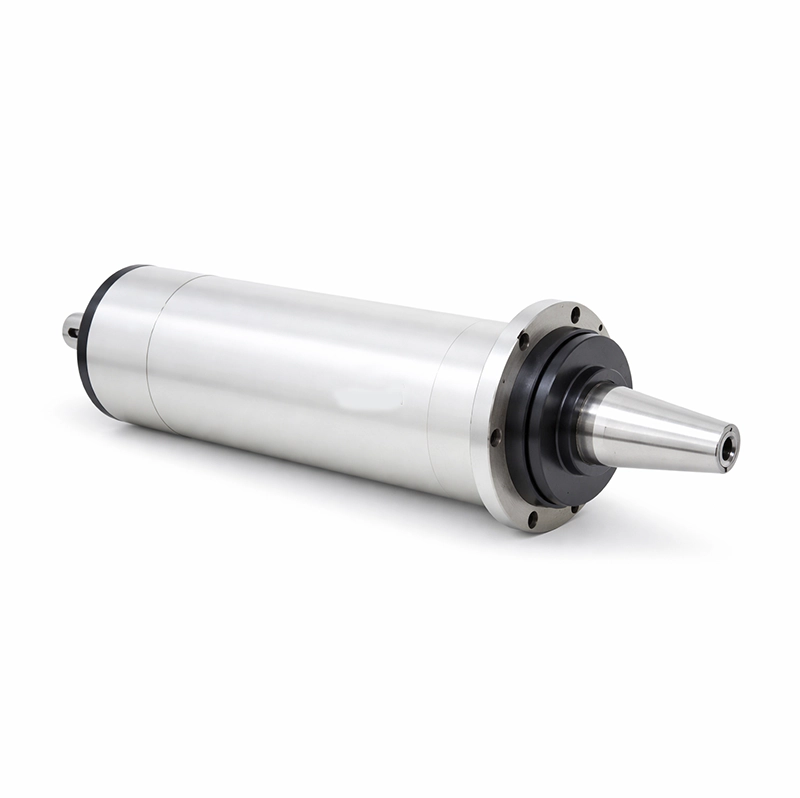
Description
Discover how upgrading your core driving mechanisms can radically slash operational overhead while elevating your machining precision to entirely new levels.
Stepping onto a bustling factory floor anywhere from Rotterdam to Eindhoven, the constant, rhythmic hum of machinery is literally the sound of profitable production. But what happens when that comforting hum turns into a painful, vibrating grinding noise? We’ve seen entire operations grind to an absolute, agonizing halt simply because a core drive component failed prematurely. Equipping your automated machinery with a Spindle Motor with High Efficiency for Cost-Effective Use isn’t just a minor maintenance upgrade; it is the beating heart of your entire production capability. Most equipment procurement managers focus purely on the initial purchase price tag (which is a natural instinct, of course), but the trick is understanding the massive impact of the total cost of ownership over a five-year span. A high-quality CNC spindle motor directly dictates your maximum production speed, significantly slashes your monthly energy bills, and ultimately determines the flawless surface finish of your final products. Whether you are running a massive, continuous-shift manufacturing plant or overseeing a specialized, high-precision machining facility across the Netherlands, finding that perfect, elusive balance between raw rotational power and ongoing operational savings is the absolute key to outperforming your regional competitors.
Unpacking the Core Mechanics: What Exactly is a Spindle Motor?
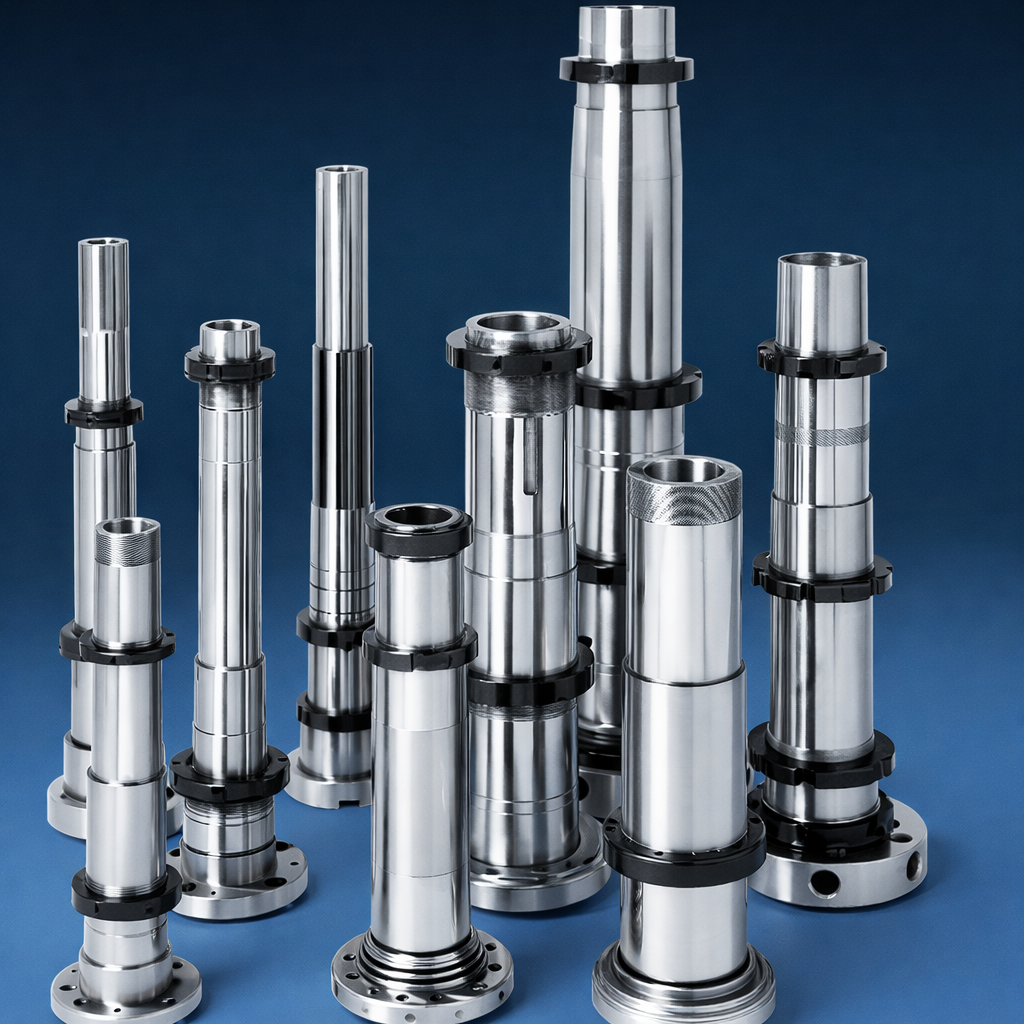
Diving right into the core mechanics of these machines, it becomes incredibly clear why they are so vital. A spindle motor is a hyper-precise, incredibly high-frequency electric powertrain purposefully designed to rotate a cutting tool—or sometimes the raw workpiece itself—at staggering, mind-bending velocities. You absolutely cannot compare these intricate devices to the standard, clunky induction motors running your facility’s ventilation fans or conveyor belts! These industrial workhorses are meticulously dynamically balanced on computer-guided rigs to absorb severe radial and axial slicing loads while maintaining an absolute, perfect geometric center. The fundamental magic of how they operate relies heavily on an external Variable Frequency Drive (VFD), which acts as the digital brain of the operation. This VFD manipulates the frequency and voltage of the electrical current feeding into the heavily insulated copper stator windings. By seamlessly shifting this electrical frequency, the internal magnetic fields spin faster or slower, instantly pulling the precision rotor along with it and effortlessly converting raw electrical amperage into the devastating mechanical torque required for high-speed material removal.
The operational footprint of these sophisticated high-speed spindle motors spans across practically every modern manufacturing discipline you can imagine. In the heavy-duty metal fabrication sector, they deliver the unrelenting, rigid torque necessary to plunge a carbide endmill deep into a solid block of aerospace-grade titanium without stalling or violently chattering. Transitioning into the expansive woodworking and architectural cabinetry sectors, these units are the absolute beating heart of massive flatbed CNC routers, spinning at up to 24,000 RPM to cleanly shear through dense natural hardwoods or abrasive composite panels without causing ugly friction burns. In our experience, even highly specialized, niche fields like delicate acrylic forming and complex plastic molding lean heavily on this specific rotational control to prevent the material from melting and instantly welding itself back onto the cutting flutes. Quite literally, without this highly refined rotational power, modern automated subtractive manufacturing would cease to exist.
Piliers techniques essentiels qui régissent votre choix d'équipement
When attempting to source the absolute best spindle motor for your factory floor, getting distracted by flashy, inflated peak-power numbers on a specification sheet is an incredibly common trap that catches many buyers off guard. The critical element you must actually analyze is the precise relationship between raw power (measured in kilowatts) and low-end torque (measured in Newton-meters). Installing a massive, screaming 9kW motor on a machine exclusively dedicated to light foam routing is an absurd waste of capital and daily electrical energy. Conversely, trying to use a budget-friendly 1.5kW router spindle to face-mill block carbon steel will instantly stall the drive, trip your electrical breakers, and likely shatter your expensive tooling into a dozen pieces! The trick is closely examining the manufacturer’s specific torque curve; if your daily operations involve hogging out thick metals at low speeds, you absolutely require a motor specifically wound with thicker gauge copper wire to deliver massive torque at those much lower VFD frequencies.
Rotational speed, commonly referred to as RPM, alongside your choice of thermal management architecture, fundamentally dictates your machine’s physical layout and operational limits. Extreme high-speed capabilities pushing past 24,000 RPM are absolutely mandatory for utilizing small-diameter tooling in aluminum or dense plastics, ensuring a pristine surface finish without leaving visible tool marks. When it comes to the cooling debate, the choice between water and air is perpetual and highly dependent on your ambient shop environment. Water-cooled systems pump a continuous flow of chilled fluid through a sealed outer jacket, making them phenomenally quiet and allowing them to maintain an incredibly stable thermal baseline during grueling 72-hour continuous production runs. Air-cooled variants, powered by an integrated shaft-driven impeller fan, are undeniably louder and can disperse dust around your shop. However, they completely eradicate the need for complex plumbing, tedious coolant fluid maintenance, and the paralyzing fear of hoses freezing solid in unheated winter workshops.
| Cooling Method | Primary Advantage | Scénario d'application idéal | Maintenance Requirement |
|---|---|---|---|
| Water-Cooled | Superior thermal stability, ultra-quiet operation | Continuous 24/7 heavy metal milling, climate-controlled shops | Regular coolant checks, pump monitoring |
| Air-Cooled | Zero plumbing, immune to freezing, highly mobile | Woodworking routers, unheated facilities, intermittent use | Blowing out dust from air intake vents |
Moving beyond just raw power and thermal dynamics, mechanical precision is the ultimate, uncompromising gatekeeper of production quality. Spindle runout—which is the microscopic, barely visible wobble of the tool bit as it spins—must be kept strictly below 0.005mm for any high-end CNC machining task. Even a fractional deviation here will drastically shorten your tool life and ruin the aesthetic surface finish of your final parts, leading to incredibly costly batch rejects. This directly ties into your facility’s spindle motor maintenance protocols. A motor constructed with premium, matched-pair ceramic angular contact bearings will naturally vibrate less, run significantly cooler, and vastly extend the interval between mandatory factory rebuilds. Committing to routine collet cleaning and strictly enforcing daily spindle warm-up routines will essentially bulletproof your substantial hardware investment for years to come.
Répondre aux exigences inflexibles du paysage industriel néerlandais
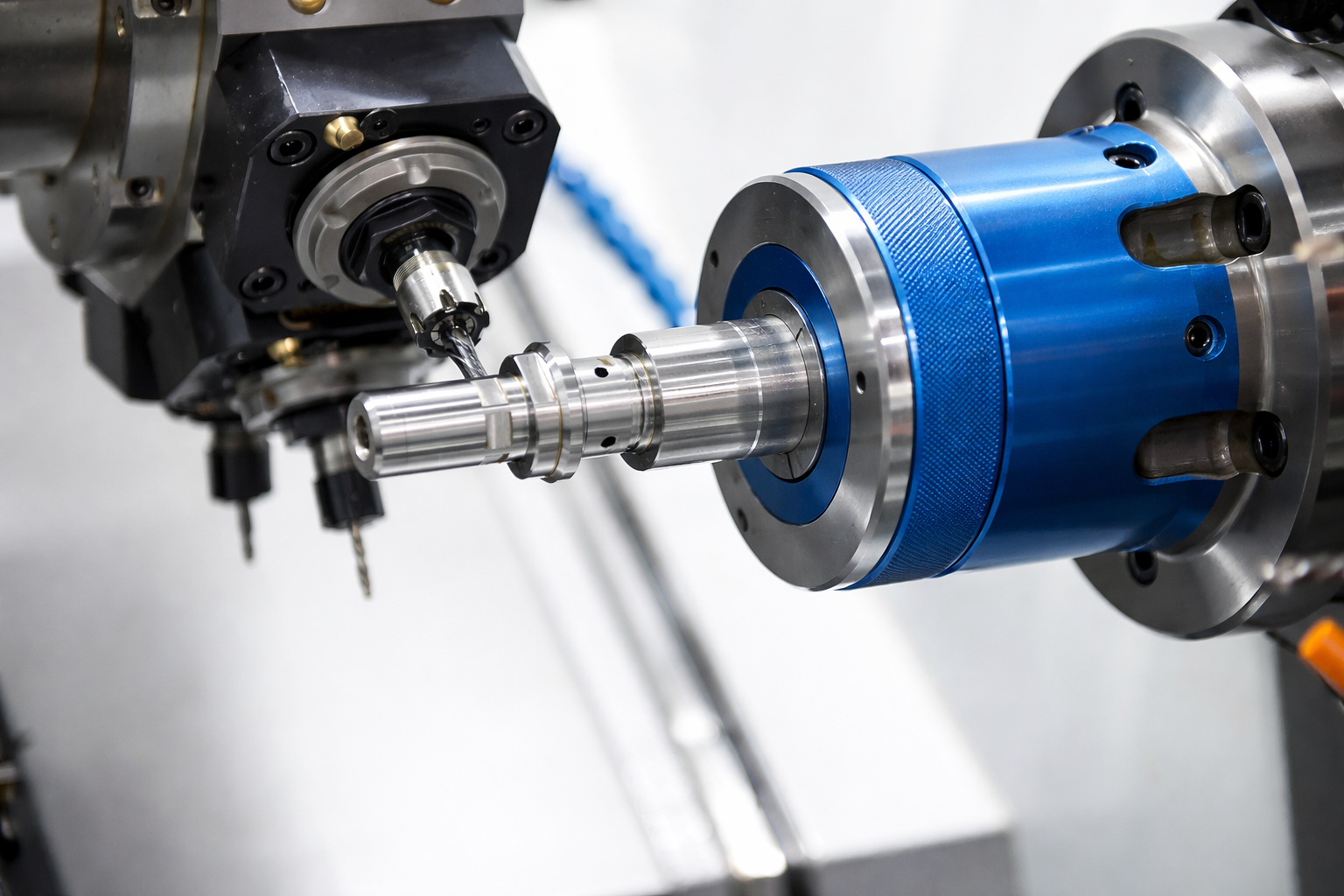
The manufacturing ecosystem nestled within the Netherlands is universally recognized as a global powerhouse of precision engineering, strict quality control, and cutting-edge smart-industry innovation. Hubs clustered around regions like Brainport Eindhoven don’t just churn out generic, low-tolerance parts; they are actively manufacturing the sophisticated machines that manufacture our future. Consequently, Dutch CNC operations demand driving equipment that delivers uncompromising, repeatable accuracy while simultaneously adhering to some of the strictest sustainability and energy-efficiency metrics found anywhere on the planet. When sourcing heavy machinery, Dutch procurement specialists heavily prioritize systems that aggressively minimize electrical waste. A high-efficiency motor that converts grid power directly into pure cutting torque actively lowers the facility’s carbon footprint and drastically slashes monthly utility overheads—a massive consideration given the current volatile state of European energy pricing models.
Regulatory compliance across this region is absolutely non-negotiable. Any rotational equipment crossing into the Dutch workspace must explicitly and legally conform to rigorous European Union safety directives. Full CE certification is not just a nice marketing badge to slap on a shipping box; it is a strict legal mandate validating that the hardware has survived intense scrutiny regarding electromagnetic compatibility (EMC)—ensuring the motor’s electrical noise won’t completely fry the delicate, highly sensitive IoT tracking sensors scattered across your automated factory floor. Furthermore, it guarantees strict adherence to all heavy machinery safety protocols and RoHS hazardous material restrictions. Our specialized product lines are inherently engineered from the ground up to not just meet, but far exceed these European standards, providing your compliance teams with the heavily audited, transparent paper trails they require to confidently pass any sudden internal safety or quality inspections.
“Upgrading to the high-efficiency 4.5kW model for our custom aluminum extrusion line in Rotterdam was a total game-changer. In our experience, heavy cuts used to cause terrible harmonic chatter. The dynamic balancing on these units is incredible; we’ve completely eliminated our post-process sanding station, saving us dozens of hours a week.”
— Maarten de V., Precision Metals Director
“We were really struggling to find an affordable yet fully compliant motor for our automated woodworking cells in Utrecht. The CE documentation provided here was absolutely flawless. We installed the air-cooled variants because our shop isn’t heated in winter, and they have been screaming along at 24,000 RPM flawlessly for over two years now.”
— Lars K., Furniture Fabrication Lead
“Partnering with a supplier who actually understands the European grid voltage was a massive relief. The energy efficiency on these new drives cut our monthly power bill noticeably. Plus, getting parts shipped quickly to our facility in Amsterdam keeps our downtime to practically zero.”
— Anouk S., Operations Manager
Guide stratégique de l'acheteur : Forger un partenariat de production résilient
Choosing a dedicated vendor for your factory’s most critical moving components is a massive, high-stakes strategic commitment. Our overriding technological advantage stems from an absolute, stubborn refusal to cut corners on internal metallurgy. We utilize ultra-pure, imported copper windings optimized through an advanced vacuum impregnation process to drastically lower electrical resistance. This means your CNC spindle motor runs significantly cooler even under heavy, abusive loads. The high-end ceramic angular contact bearings we meticulously integrate are sourced specifically for their unique ability to resist thermal expansion at incredible speeds. This isn’t just a fancy spec sheet boast to make us look good; it translates directly into a physical drive system that maintains strict micron-level accuracy year after year, effortlessly satisfying the intensely demanding quality control parameters inherent to Dutch manufacturing facilities.
Nous savons pertinemment qu'un équipement performant est totalement inutile sans un réseau d'assistance technique réactif. Notre écosystème de services après-vente est conçu pour assurer le bon fonctionnement de vos broches et la satisfaction de vos opérateurs. Nous fournissons des tableaux de paramétrage VFD détaillés et faciles à comprendre, des consultations d'installation en direct et un dépannage rapide pour vous aider à résoudre les problèmes complexes de résonance harmonique sur votre configuration de portique. Forts de solides fondements en matière de gestion de la qualité ISO et de tests CE complets et accessibles au public, notre réputation repose sur une fiabilité transparente et des résultats concrets et mesurables en production, contribuant ainsi à la rentabilité de vos opérations.
Furthermore, we acutely recognize that highly specialized European engineering often demands entirely bespoke solutions. Standard catalogs simply don’t fit every custom-built machine. Our engineering division frequently collaborates directly with clients to design modified mounting flanges, invent unique pressurized labyrinth sealing systems for highly caustic milling environments, and machine specific shaft tapers to match existing automatic tool carousels. Merged seamlessly with our heavily optimized supply chain and strategic warehousing inventory management tailored for the European market, we guarantee rapid, reliable delivery of your critical replacement parts. When a machine inevitably goes down, our logistics network ensures your tailored solution arrives fast, mercilessly cutting down your expensive, agonizing downtime.
Exploiter une polyvalence illimitée : Applications industrielles spécialisées
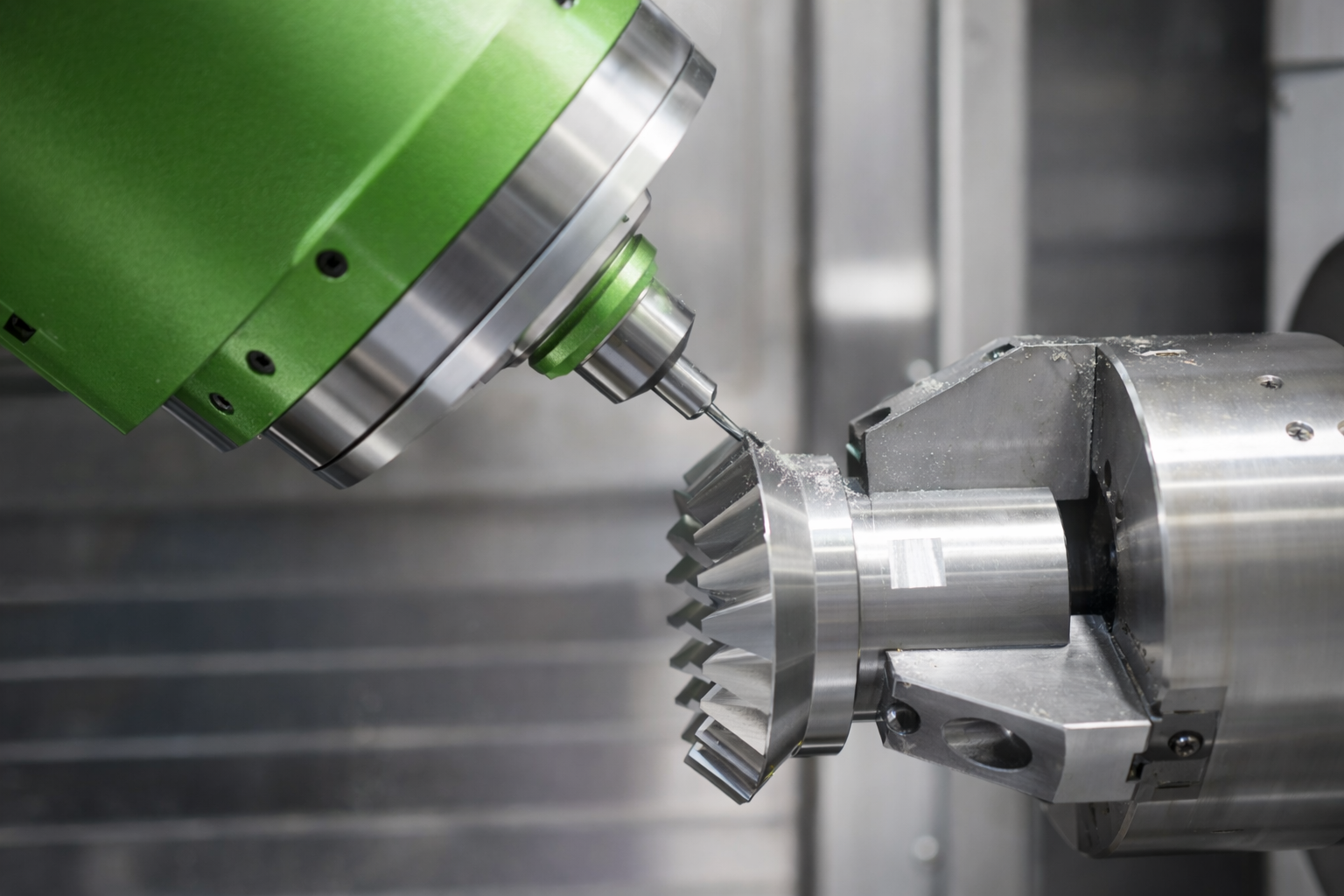
The true brilliance of a masterfully engineered motor lies in its ability to adapt seamlessly and perform flawlessly across wildly diverse manufacturing verticals. In the brutal, unforgiving arena of metal processing, immense structural rigidity is the golden rule. Whether you are heavily facing off thick carbon steel plates or executing intricate, high-speed 5-axis milling on aerospace aluminum alloys, our specialized heavy-duty motors absorb massive radial forces without deflecting a single hair. This unwavering, rock-solid stability prevents the cutting tool from chattering, significantly accelerating your volumetric material removal rate while simultaneously preserving the delicate, easily chipped cutting edges of your expensive carbide endmills.
Transitioning seamlessly into the massive woodworking and high-end cabinetry space, sheer rotational velocity takes absolute command of the operation. Routing abrasive composite panels, melamine, or engraving natural timber requires exceptionally high-speed spindle motors to cleanly and instantly shear the wood fibers before they have any chance to splinter or tear out. Our units thoroughly dominate multi-head nesting machines, delivering glass-smooth edge finishes right off the table that entirely eliminate the need for costly secondary manual sanding. Over in the precision plastic and acrylic fabrication sectors, managing heat generation is the ultimate, endless battle. By deploying our perfectly balanced, water-cooled variants, ambient heat transfer into the cutting zone is heavily restricted, completely preventing the acrylic from melting and welding itself to the cutter, saving countless sheets of expensive raw material from the scrap bin.
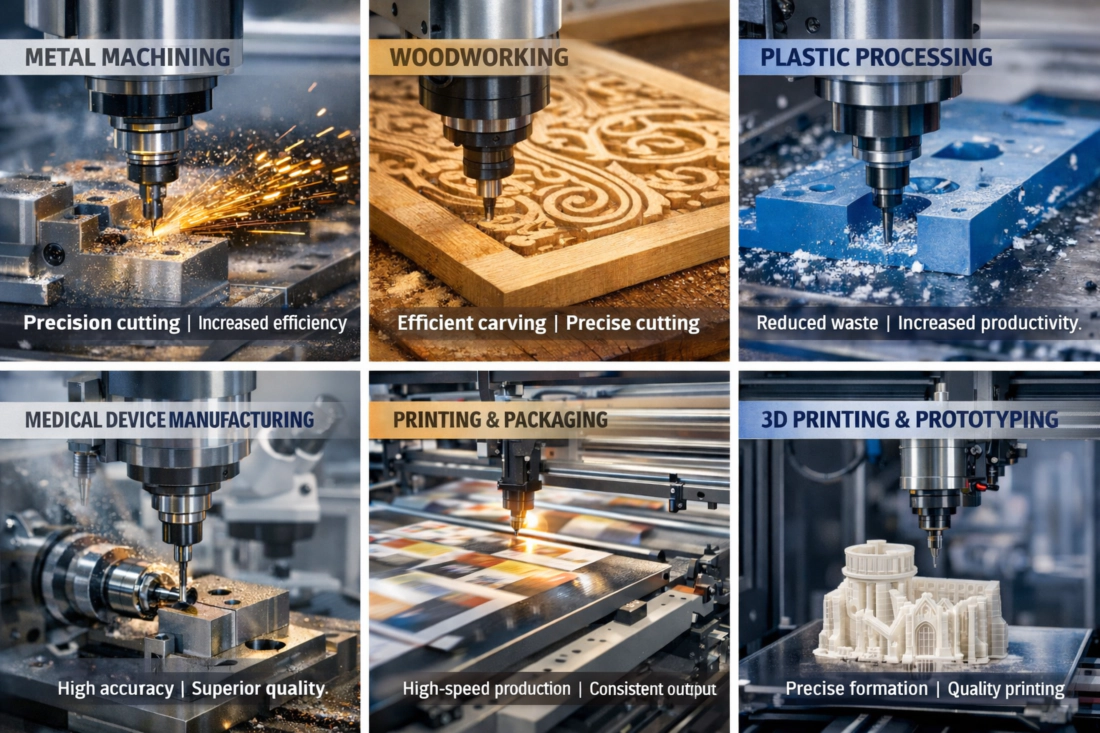
These versatile motors also drive incredible, life-changing innovations in highly niche, hyper-strict markets. In the sterile medical device manufacturing sector, where intricate surgical instruments and titanium bone implants are meticulously crafted, our ultra-low runout models guarantee the micron-level precision strictly required by global health authorities. Moving into the realm of high-speed printing and packaging lines, most printers don’t realize that the precise rotational accuracy of their cutting and scoring wheels is entirely dependent on a compact CNC spindle motor hidden within the chassis! We ensure those massive paperboard production runs remain perfectly consistent without jamming. Additionally, the booming 3D printing and rapid prototyping fields heavily utilize these exact drives for crucial subtractive post-processing, where freshly printed, slightly rough metal components are finely milled down to their exact, final functional tolerances.
L'avantage incontestable de l'ingénierie : pourquoi nos variateurs dominent
Dissecting the complex internal architecture of our products immediately and clearly reveals exactly why they are so heavily favored across European machine shops. The absolute core advantage is the brilliant, harmonious synergy between extreme rotational performance and noticeably low energy consumption. By extensively optimizing the stator’s magnetic flux pathways during the design phase, we ensure that practically every single watt of expensive electrical energy drawn from your facility’s grid is instantly converted into highly usable cutting torque, rather than being inefficiently wasted as ambient heat. This highly efficient, smart design allows volume manufacturers to dramatically scale up their daily production throughput without causing a corresponding, terrifying explosion in their monthly energy costs.
La robustesse à toute épreuve, même sous forte contrainte, est inscrite dans la conception même de nos produits. Conscients des conditions extrêmes auxquelles peut être soumis un châssis de machine CNC à arrosage par immersion, nos moteurs intègrent des technologies d'étanchéité labyrinthique avancées et des systèmes de purge à pression d'air positive. Ces systèmes repoussent activement et en continu les poussières conductrices, les copeaux métalliques et les fluides de coupe hautement corrosifs, les protégeant ainsi des roulements. L'équilibrage dynamique rigoureux et précis du rotor, effectué sur des bancs d'essai informatisés lors de l'assemblage, garantit des vibrations de fonctionnement extrêmement faibles. Cette attention méticuleuse aux détails contribue non seulement à réduire le bruit dans votre atelier, mais elle préserve également les bagues de roulement internes des micro-piqûres et protège la structure de votre portique CNC, coûteuse, de la fatigue des métaux et des microfissures.
Aligning perfectly with strict Dutch eco-initiatives and forward-thinking sustainability goals, our environmentally conscious designs guarantee incredibly low acoustic pollution signatures and utilize raw materials entirely free from restricted, toxic heavy metals. This universal, eco-friendly applicability ensures our drives can be effortlessly and legally retrofitted onto older, legacy routing tables or wired directly into brand new, state-of-the-art robotic work cells without friction. Paired with our uncompromising, highly responsive aftermarket support team that treats your production downtime as a top-tier emergency, it is crystal clear why our drive systems are the premier, trusted choice for demanding engineers seeking a Spindle Motor with High Efficiency for Cost-Effective Use.
Prêt à révolutionner fondamentalement vos capacités d'usinage ?
Integrating a masterfully calibrated, highly efficient CNC spindle motor is arguably the single most effective, high-ROI hardware decision you can make today to guarantee absolute cutting accuracy, rapidly multiply your factory throughput, and fiercely safeguard your long-term profitability. Stop allowing outdated, violently vibrating equipment to dictate your production schedule!
Expert FAQ: Troubleshooting, Selection & Maintenance
Comment choisir précisément le meilleur moteur de broche pour ma machine CNC spécifique ?
Un choix judicieux exige une évaluation rigoureuse et réaliste de la dureté des matériaux que vous utilisez quotidiennement, des diamètres de vos outils et de la capacité d'ampérage de votre variateur de fréquence. Si votre atelier travaille régulièrement de l'acier au carbone épais, vous devez opter pour un moteur spécialement bobiné pour un couple élevé à bas régime (ce qui implique généralement un châssis plus imposant et une puissance nominale plus élevée). Pour l'usinage rapide de plastiques plus souples, de mousses ou de bois, les moteurs de broche à grande vitesse (tournant entre 18 000 et 24 000 tr/min) de puissance nominale inférieure sont nettement plus performants. Assurez-vous toujours que votre variateur de fréquence actuel peut fournir l'ampérage continu maximal requis par le nouveau moteur sans déclencher ses alarmes de sécurité thermique internes.
Comment puis-je diagnostiquer avec précision si mon moteur de broche commence à tomber en panne ?
A failing motor almost always provides clear auditory and thermal warnings long before it completely and catastrophically seizes on the gantry. The most common red flag is a distinct, sudden change in pitch—a high-pitched, screaming whine or a harsh, metallic grinding noise strongly indicates that the delicate ceramic bearing cages are actively disintegrating inside. You should also carefully touch the outer housing after a cycle; excessive localized heat near the bottom nose cap signals immense internal friction. Lastly, if your previously flawless surface finishes suddenly show deep, ugly chatter marks, your spindle runout has drastically increased due to mechanical bearing wear, signaling an immediate need for replacement.
Quelle est la différence pratique en termes de fonctionnement entre les broches refroidies par eau et celles refroidies par air ?
La principale différence réside dans leur méthode de dissipation thermique. Les systèmes à refroidissement par eau utilisent un refroidisseur industriel externe pour faire circuler un flux continu de fluide à travers une enveloppe extérieure étanche. Extrêmement silencieux, ils assurent une stabilité thermique optimale même en fonctionnement continu 24 h/24, mais nécessitent des pompes externes, des réservoirs et un entretien régulier du fluide. Les modèles à refroidissement par air, quant à eux, utilisent un ventilateur à hélice monté sur l'arbre pour souffler l'air ambiant à travers le boîtier. Très pratiques, ils ne requièrent aucune plomberie et sont totalement insensibles au gel, mais fonctionnent à un niveau sonore nettement plus élevé et peuvent disperser de fines poussières d'atelier.
À quoi ressemble un programme d'entretien rigoureux et professionnel pour un moteur de broche ?
Un entretien préventif et rigoureux du moteur de broche est essentiel pour optimiser la durée de vie des composants. Quotidiennement : les opérateurs doivent utiliser un chiffon conique non pelucheux spécialisé pour nettoyer soigneusement l’intérieur du cône et de la pince ; la poussière microscopique qui s’y accumule provoque un faux-rond important. Hebdomadairement : vérifiez que les ventilateurs de refroidissement du variateur de fréquence ne sont pas obstrués et inspectez minutieusement le réservoir du refroidisseur d’eau afin de détecter toute accumulation d’algues ou de copeaux métalliques. Mensuellement : fixez un comparateur à cadran de haute précision à une broche de contrôle rectifiée insérée dans la pince pour mesurer et enregistrer précisément le faux-rond de l’arbre, permettant ainsi de suivre de près la dégradation des roulements au fil du temps.
Comment puis-je prolonger considérablement la durée de vie globale de mon moteur de broche ?
La méthode professionnelle la plus efficace consiste à imposer une macro de préchauffage stricte et obligatoire. Ne forcez jamais une broche froide à 24 000 tr/min d'un coup ! Programmez votre machine pour qu'elle fonctionne à 251 TP3T pendant trois minutes, puis passez à 501 TP3T, puis à 751 TP3T. Cette montée en régime progressive permet à la graisse haute vitesse interne de fondre, de se répartir uniformément sur les bagues des roulements et d'atteindre son point de dilatation thermique optimal en toute sécurité. De plus, n'utilisez jamais d'air comprimé haute pression pour dépoussiérer le joint d'étanchéité inférieur de l'arbre : cette action imprudente projette systématiquement des microparticules abrasives à travers le joint de protection, directement dans vos roulements fragiles, les détruisant de l'intérieur.