Description
Transform your production floor with highly engineered rotational power designed to slash operational downtime and elevate machining precision to unprecedented levels.
Walking across a busy, high-volume production floor, the rhythmic, high-pitched hum of a perfectly calibrated CNC machine is the undeniable sound of profitability in motion. We’ve seen countless scenarios where that hum is abruptly interrupted by the horrific grinding noise of a failing drive unit, bringing the entire manufacturing schedule to a painful, grinding halt. Finding a truly reliable spindle motor for CNC milling machines is the absolute dividing line between a highly profitable quarter and a logistical nightmare of missed deadlines and furious clients. Upgrading this vital component isn’t just about replacing a worn-out part; it is a profound strategic maneuver that aggressively dictates your daily production capacity, minimizes your raw material waste margins, and ultimately determines the flawless surface quality of every single product you ship out the door (which, let’s be entirely honest, is the only thing your end customers actually care about).
This comprehensive breakdown is engineered specifically for the dedicated professionals who actually keep the Dutch industrial sector moving forward—the sharp machine operators, the forward-thinking automated factory directors, and the meticulous equipment sourcing specialists who stubbornly refuse to compromise on build quality. Navigating the incredibly dense European machinery market requires looking far past the flashy marketing brochures to find true, unrelenting mechanical value that can survive continuous abuse. You require heavy-duty components that won’t simply survive but will actively thrive under the brutal 24/7 continuous cycles demanded by modern, automated work cells operating in high-tech hubs like Brainport Eindhoven. By understanding exactly how a premium CNC spindle motor interfaces with your specific materials, you can confidently source equipment that drastically lowers your long-term maintenance overhead while practically doubling your daily flawless output without breaking a sweat.
Decoding the Core Mechanics: What Exactly is a Spindle Motor?
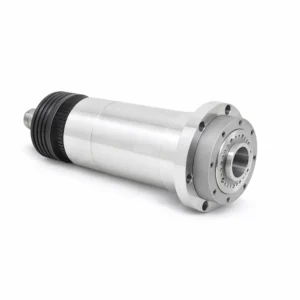
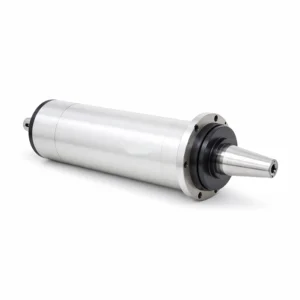
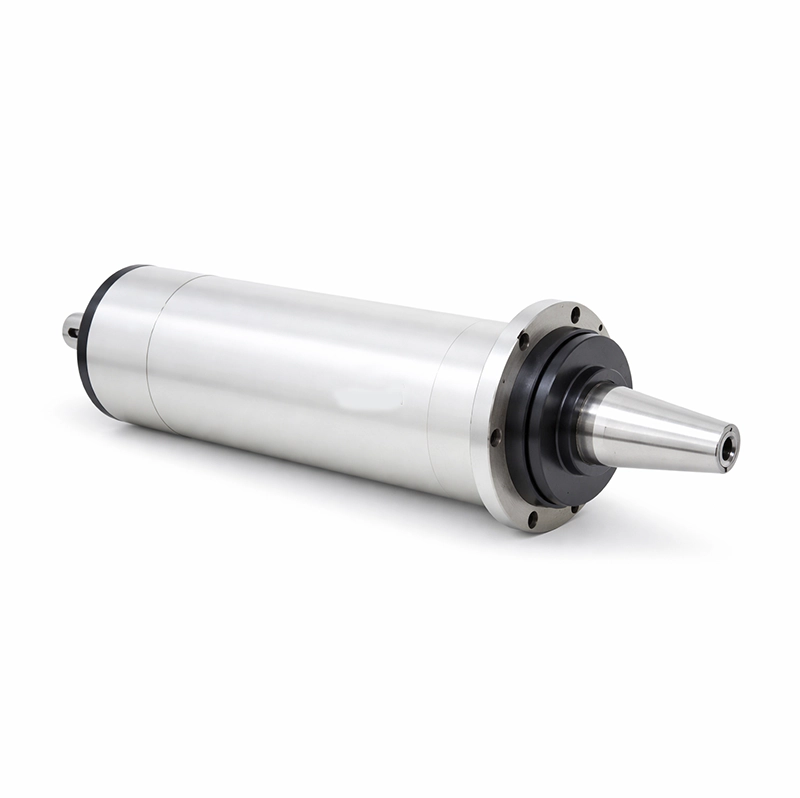
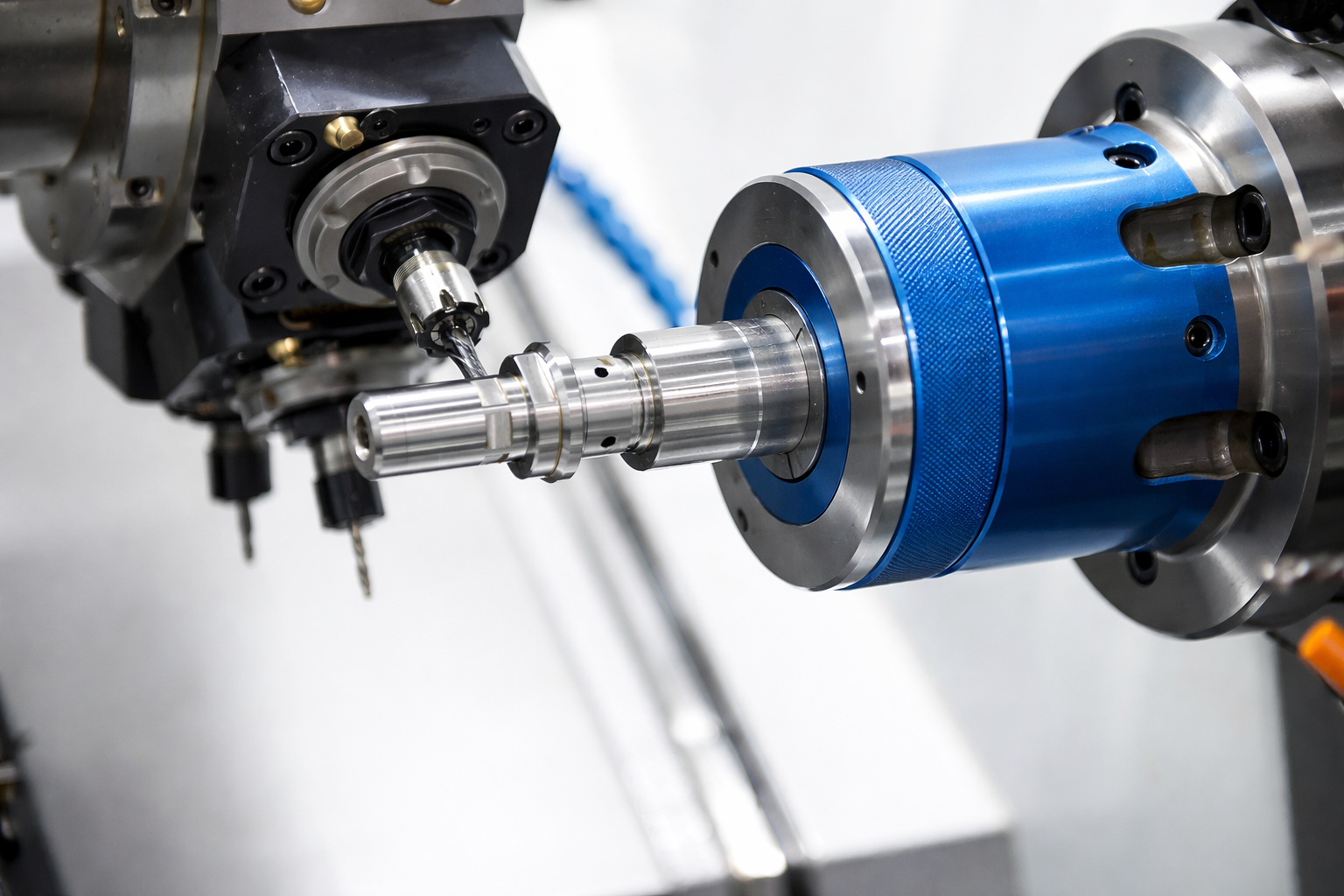
Peeling back the heavy, sealed steel housing reveals that a spindle motor is a hyper-precise, incredibly high-frequency electric powertrain purposefully designed to rotate a cutting tool—or sometimes the raw workpiece itself—at staggering, mind-bending velocities. You absolutely cannot compare these intricate devices to the standard, clunky induction motors running your facility’s ventilation fans or conveyor belts. These industrial workhorses are meticulously dynamically balanced to absorb severe radial and axial slicing loads while maintaining an absolute, perfect geometric center. The fundamental magic relies on an external Variable Frequency Drive (VFD), which acts as the digital brain. This VFD manipulates the frequency and voltage of the electrical current feeding into the heavily insulated copper stator windings. By shifting this electrical frequency, the magnetic fields spin faster or slower, instantly pulling the precision rotor along with it and effortlessly converting raw electrical amperage into the devastating mechanical torque required for high-speed material removal.
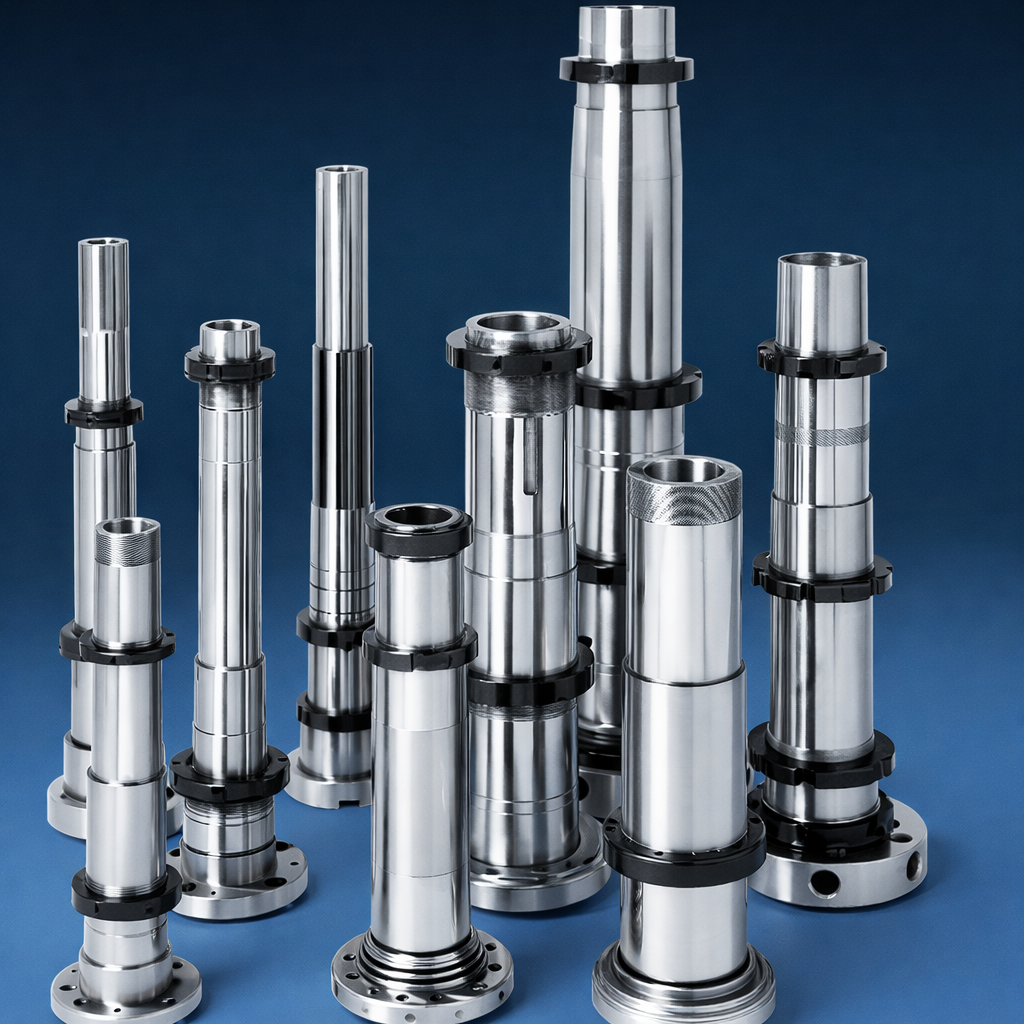
The operational footprint of these high-speed spindle motors spans across practically every modern manufacturing discipline you can imagine. In the heavy-duty metal fabrication sector, they deliver the unrelenting, rigid torque necessary to plunge a carbide endmill deep into a solid block of aerospace-grade titanium without stalling or violently chattering. Transitioning into the expansive woodworking and architectural cabinetry sectors, these units are the absolute beating heart of massive flatbed routers, spinning at up to 24,000 RPM to cleanly shear through dense natural hardwoods or abrasive composites without causing ugly friction burns. In our experience, even highly specialized fields like acrylic forming and complex plastic molding lean heavily on this specific rotational control to prevent the material from melting and instantly welding itself back onto the cutting flutes. Quite literally, without this highly refined rotational power, modern automated subtractive manufacturing would cease to exist.
Piliers techniques essentiels qui régissent votre choix d'équipement
When attempting to source the absolute best spindle motor for your factory, getting distracted by flashy, inflated peak-power numbers is an incredibly common trap that catches many buyers off guard. The critical element you must analyze is the precise relationship between raw power (measured in kilowatts) and low-end torque (measured in Newton-meters). Installing a massive, screaming 9kW motor on a machine exclusively dedicated to light foam routing is an absurd waste of capital and daily electrical energy. Conversely, trying to use a budget-friendly 1.5kW router spindle to face-mill block carbon steel will instantly stall the drive, trip your breakers, and likely shatter your expensive tooling into a dozen pieces. The trick is closely examining the manufacturer’s torque curve; if your daily operations involve hogging out thick metals at low speeds, you absolutely require a motor specifically wound with thicker gauge wire to deliver massive torque at those lower VFD frequencies.
Rotational speed, commonly referred to as RPM, alongside your choice of thermal management architecture, fundamentally dictates your machine’s physical layout and operational limits. High-speed capabilities pushing past 24,000 RPM are absolutely mandatory for utilizing small-diameter tooling in aluminum or dense plastics, ensuring a pristine surface finish without leaving tool marks. When it comes to cooling, the debate between water and air is perpetual and highly dependent on your ambient shop environment. Water-cooled systems pump a continuous flow of chilled fluid through a sealed outer jacket, making them phenomenally quiet and allowing them to maintain an incredibly stable thermal baseline during grueling 72-hour continuous production runs. Air-cooled variants, powered by an integrated shaft-driven impeller fan, are undeniably louder and can disperse dust around your shop. However, they completely eradicate the need for complex plumbing, tedious coolant maintenance, and the paralyzing fear of hoses freezing solid in unheated winter workshops!
Moving beyond just raw power and thermal dynamics, mechanical precision is the ultimate, uncompromising gatekeeper of production quality. Spindle runout—which is the microscopic, barely visible wobble of the tool bit as it spins—must be kept strictly below 0.005mm for any high-end CNC machining task. Even a fractional deviation here will drastically shorten your tool life and ruin the aesthetic surface finish of your final parts, leading to costly rejects. This directly ties into your facility’s spindle motor maintenance protocols. A motor constructed with premium, matched-pair ceramic angular contact bearings will naturally vibrate less, run significantly cooler, and vastly extend the interval between mandatory factory rebuilds. Committing to routine collet cleaning and strictly enforcing daily spindle warm-up routines will essentially bulletproof your substantial hardware investment for years to come.
Répondre aux exigences inflexibles du paysage industriel néerlandais
The manufacturing ecosystem nestled within the Netherlands is universally recognized as a global powerhouse of precision engineering, strict quality control, and cutting-edge smart-industry innovation. Hubs clustered around regions like Brainport Eindhoven don’t just churn out generic, low-tolerance parts; they are actively manufacturing the sophisticated machines that manufacture our future. Consequently, Dutch CNC operations demand driving equipment that delivers uncompromising, repeatable accuracy while simultaneously adhering to some of the strictest sustainability and energy-efficiency metrics found anywhere on the planet. When sourcing heavy machinery, Dutch procurement specialists heavily prioritize systems that aggressively minimize electrical waste. A high-power spindle motor that efficiently converts grid power directly into pure cutting torque actively lowers the facility’s carbon footprint and drastically slashes monthly utility overheads—a massive consideration given the current volatile state of European energy pricing models.
Regulatory compliance across this region is absolutely non-negotiable. Any rotational equipment crossing into the Dutch workspace must explicitly and legally conform to rigorous European Union safety directives. Full CE certification is not just a nice marketing badge to slap on a box; it is a strict legal mandate validating that the hardware has survived intense scrutiny regarding electromagnetic compatibility (EMC)—ensuring the motor’s electrical noise won’t completely fry the delicate, highly sensitive IoT tracking sensors scattered across your automated factory floor. Furthermore, it guarantees adherence to all heavy machinery safety protocols and RoHS hazardous material restrictions. Our specialized product lines are inherently engineered from the ground up to not just meet, but far exceed these European standards, providing your compliance teams with the heavily audited, transparent paper trails they require to confidently pass any sudden internal safety or quality inspections.
“Upgrading to the 4.5kW high-torque model for our custom aluminum extrusion line in Rotterdam was a total game-changer. In our experience, heavy cuts used to cause terrible harmonic chatter. The dynamic balancing on these units is incredible; we’ve completely eliminated our post-process sanding station, saving us dozens of hours a week.”
— Maarten de V., directeur des métaux de précision
“We were really struggling to find an affordable yet compliant reliable spindle motor for CNC milling machines in our automated woodworking cells in Utrecht. The CE documentation provided here was absolutely flawless. We installed the air-cooled variants because our shop isn’t heated in winter, and they have been screaming along at 24,000 RPM flawlessly for over two years now.”
— Lars K., responsable de la fabrication de meubles
“Most printers don’t realize how crucial exact RPM matching is for high-speed die-cutting machines. We swapped out our failing legacy motors for these high-power precision units. The thermal stability of the water-cooled jackets means we can run our packaging lines continuous 24/7 shifts without fearing a sudden bearing collapse.”
— Anouk S., Packaging Line Supervisor
Guide stratégique de l'acheteur : Forger un partenariat de production résilient
Choisir un fournisseur dédié pour les composants mobiles les plus critiques de votre usine représente un engagement stratégique majeur. Notre principal avantage technologique repose sur un refus catégorique de tout compromis sur la métallurgie interne. Nous utilisons des bobinages en cuivre importé ultra-pur, optimisés par un procédé d'imprégnation sous vide avancé afin de réduire drastiquement la résistance électrique. Ainsi, le moteur de votre broche CNC fonctionne à une température nettement inférieure, même sous des charges importantes et extrêmes. Les roulements à contact oblique en céramique haut de gamme que nous intégrons avec minutie sont sélectionnés pour leur capacité unique à résister à la dilatation thermique à des vitesses incroyables. Il ne s'agit pas d'un simple argument marketing : cela se traduit concrètement par un système d'entraînement qui garantit une précision micrométrique année après année, répondant ainsi sans effort aux exigences de contrôle qualité extrêmement strictes propres aux usines néerlandaises.
We know that a robust piece of hardware is ultimately entirely useless without the aggressive engineering support network to back it up. Our aftermarket service ecosystem is structured specifically to proactively keep your spindles spinning and your operators happy. We provide highly detailed, easily digestible VFD parameter mapping charts, offer dedicated live installation consultations, and execute rapid-response troubleshooting to help you conquer complex harmonic resonance issues on your specific gantry setup. Backed heavily by stringent ISO quality management frameworks and comprehensive, publicly available CE testing, our entire reputation is built on transparent reliability and tangible, measurable factory floor results that actively protect your bottom line.
Furthermore, we acutely recognize that highly specialized European engineering often demands entirely bespoke solutions. Standard catalogs simply don’t fit every custom-built machine. Our engineering division frequently collaborates directly with clients to design modified mounting flanges, invent unique pressurized labyrinth sealing systems for highly caustic milling environments, and machine specific shaft tapers to match existing tool carousels. Merged seamlessly with our heavily optimized supply chain and strategic warehousing inventory management for the European market, we guarantee rapid, reliable delivery of your critical replacement parts. When a machine inevitably goes down, our logistics network ensures your tailored solution arrives fast, mercilessly cutting down your expensive, agonizing downtime.
Exploiter une polyvalence illimitée : Applications industrielles spécialisées
Le véritable atout d'un moteur conçu avec une maîtrise exceptionnelle réside dans sa capacité à s'adapter parfaitement et à fonctionner sans faille dans des secteurs de fabrication extrêmement diversifiés. Dans le domaine exigeant du traitement des métaux, une rigidité structurelle à toute épreuve est essentielle. Qu'il s'agisse de surfaçage intensif de plaques d'acier au carbone épaisses ou d'usinage 5 axes de haute précision à grande vitesse sur des alliages d'aluminium aérospatiaux, nos moteurs haute performance spécialisés absorbent des forces radiales considérables sans la moindre déformation. Cette stabilité inébranlable empêche les vibrations de l'outil de coupe, accélérant significativement le taux d'enlèvement de matière tout en préservant les arêtes de coupe délicates et fragiles de vos coûteuses fraises en carbure.
S'intégrant parfaitement aux secteurs du travail du bois massif et de l'ébénisterie haut de gamme, la vitesse de rotation est primordiale. Le fraisage de panneaux composites abrasifs, de mélamine ou la gravure du bois naturel exigent des moteurs de broche à très haute vitesse pour découper les fibres de bois proprement et instantanément, avant qu'elles ne s'écaillent ou ne s'arrachent. Nos unités dominent les machines d'imbrication multi-têtes, offrant des finitions de chants d'une douceur exceptionnelle dès la sortie de la table, éliminant ainsi tout besoin de ponçage manuel secondaire coûteux. Dans les secteurs de la fabrication de précision de plastique et d'acrylique, la gestion de la chaleur est un défi constant. Grâce à nos modèles parfaitement équilibrés et refroidis par eau, le transfert de chaleur ambiante vers la zone de coupe est fortement limité, empêchant ainsi l'acrylique de fondre et de se souder à la fraise, et préservant d'innombrables feuilles de matière première coûteuse.
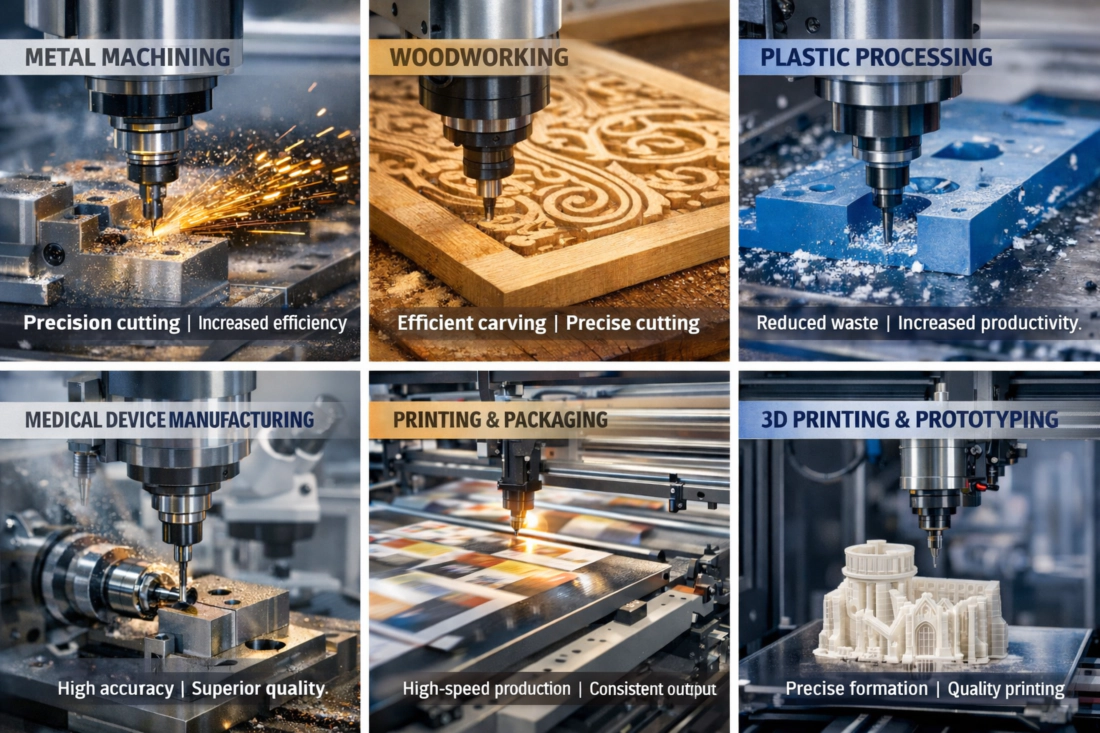
These versatile motors also drive incredible, life-changing innovations in highly niche, hyper-strict markets. In the sterile medical device manufacturing sector, where intricate surgical instruments and titanium bone implants are meticulously crafted, our ultra-low runout models guarantee the micron-level precision strictly required by global health authorities. Most printers don’t realize it, but in the fast-paced, high-volume printing and packaging industries, our compact drives are frequently deployed for synchronized high-speed paperboard scoring, slicing, and automated die-cutting, ensuring massive production runs remain perfectly consistent without jamming. Additionally, the booming 3D printing and rapid prototyping fields heavily utilize these exact drives for crucial subtractive post-processing, where freshly printed, slightly rough metal components are finely milled down to their exact, final functional tolerances.
L'avantage incontestable de l'ingénierie : pourquoi nos variateurs dominent
L'analyse de l'architecture interne complexe de nos produits révèle immédiatement et clairement pourquoi ils sont si plébiscités par les ateliers d'usinage européens. Leur principal atout réside dans la synergie parfaite entre des performances de rotation exceptionnelles et une consommation d'énergie remarquablement faible. En optimisant en profondeur les flux magnétiques du stator dès la conception, nous garantissons que chaque watt d'énergie électrique, précieuse et consommée sur le réseau de votre usine, est instantanément converti en couple de coupe hautement exploitable, au lieu d'être dissipé sous forme de chaleur ambiante. Cette conception intelligente et très efficace permet aux fabricants de grande série d'accroître considérablement leur productivité journalière sans que leurs coûts énergétiques mensuels n'explosent.
La robustesse à toute épreuve, même sous forte contrainte, est inscrite dans la conception même de nos produits. Conscients des conditions extrêmes auxquelles peut être soumis un châssis de machine CNC à arrosage par immersion, nos moteurs intègrent des technologies d'étanchéité labyrinthique avancées et des systèmes de purge à pression d'air positive. Ces systèmes repoussent activement et en continu les poussières conductrices, les copeaux métalliques et les fluides de coupe hautement corrosifs, les protégeant ainsi des roulements. L'équilibrage dynamique rigoureux et précis du rotor, effectué sur des bancs d'essai informatisés lors de l'assemblage, garantit des vibrations de fonctionnement extrêmement faibles. Cette attention méticuleuse aux détails contribue non seulement à réduire le bruit dans votre atelier, mais elle préserve également les bagues de roulement internes des micro-piqûres et protège la structure de votre portique CNC, coûteuse, de la fatigue des métaux et des microfissures.
Parfaitement conformes aux strictes initiatives écologiques néerlandaises et aux objectifs de développement durable les plus ambitieux, nos conceptions respectueuses de l'environnement garantissent un niveau sonore extrêmement faible et utilisent des matières premières totalement exemptes de métaux lourds toxiques et réglementés. Cette compatibilité universelle et écologique permet une installation simple et conforme à la réglementation sur les anciennes tables de routage ou un câblage direct et sans difficulté dans les cellules robotisées de dernière génération. Grâce à notre service après-vente réactif et sans compromis, qui traite vos arrêts de production comme une priorité absolue, il est évident que nos systèmes d'entraînement sont le choix de prédilection des ingénieurs les plus exigeants.
Prêt à révolutionner fondamentalement vos capacités d'usinage ?
Integrating a masterfully calibrated, reliable spindle motor for CNC milling machines is arguably the single most effective, high-ROI hardware decision you can make today to guarantee absolute cutting accuracy, rapidly multiply your factory throughput, and fiercely safeguard your long-term profitability. Stop allowing outdated, violently vibrating equipment to dictate your production schedule and bottleneck your business growth.
Consultez notre équipe d'ingénierie technique dès aujourd'hui